



2026 I-SEED Award Winner
Diné Agroecology Resilience
A community-led framework restoring land, food sovereignty, and regenerative economies across the Black Mesa region
Description
Diné Agroecology Resilience is a community-led design initiative that has evolved over more than a decade to strengthen cultural stewardship, build regenerative economic opportunities, and restore ecological health across the Black Mesa region of Diné ancestral land. Nihikeya starts by engaging communities through the stewardship instructions given to the Diné under Diné Fundamental Law, a pathway to plan and enact projects under Hózhóogo Na’at’áh (The Four Pillars of Diné Knowledge), and a space to share and listen under Hooghan Dialogues. Together, these frameworks allow Nihikeya and the community to co-identify local priorities and design solutions grounded in Indigenous knowledge and self-determination.
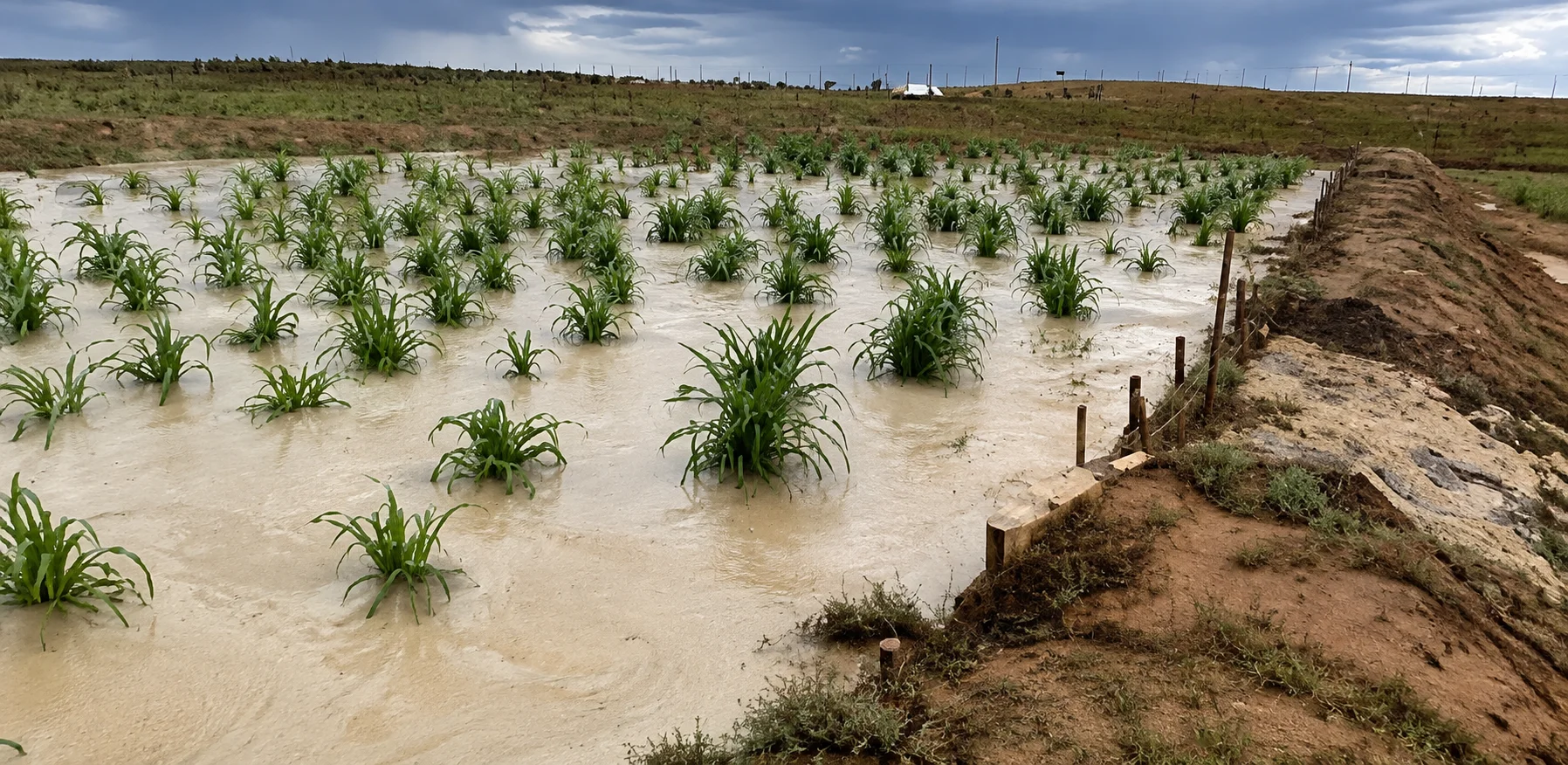
The resulting projects integrate ecological restoration with community organizing, youth workforce development, food sovereignty, and cultural revitalization. At Tsé Adahnidilwoo’í (Sliding Rock) Farm, we host farm tours at demonstration sites to empower community members to replicate accessible restoration practices, and we train youth in regenerative agriculture and land restoration to assist local farmers and ranchers. Our watershed restoration techniques have restored 56 traditional agricultural fields, constructed rock check dams, and improved livestock ponds. We also increase what we call Ecological Literacy through the documentation of ecological knowledge and Place Names.
The project also creates “community readiness” by combining traditional ecological knowledge with conservation planning and technical expertise, enabling communities to shape future land management plans and advocate for policies that reflect their priorities. In centering clan matriarchal leadership, Indigenous self-governance, and hands-on restoration, Diné Agroecology Resilience demonstrates how culturally grounded design can simultaneously restore landscapes, revitalize food systems, strengthen community capacity for climate resilience and environmental justice.
Stakeholders
Primary stakeholders include Diné families living throughout the Black Mesa region, particularly farmers, ranchers, grazing permit holders, elders, youth, clan mothers, and traditional knowledge holders.
Project partners include Nihikeya; local community chapters around Pinon, AZ; grassroots organizations like One River One Voice, Tolani Lake Enterprises, and Ho’zho’ogo Nahtat’a’; local technicians like Conservation Planning LLC; local farmers and ranchers; educators; hydrologists; engineers; ecologists; and Navajo Nation policy leaders engaged in land stewardship and restoration planning; future generations of Diné youth; wildlife and ecological habitats; and neighboring communities that may replicate the design methodology.
Design Team
Roberto Nutlouis – Executive Director, Nihikeya; Marie Gladue – Executive Director of Ho’zho’ogo Nahta’a’; Ed Harvey — Founder of Conservation Planning LLC; Clan Mothers, Elders, and Knowledge Holders; Youth Restoration Crews; Community Farmers and Ranchers; One River One Voice; Tolani Lake Enterprises, Technical Advisors
Jury Summary
Diné Agroecology Resilience is an exceptional Indigenous-led landscape architecture initiative that unites ecological restoration, food sovereignty, regenerative economies, cultural revitalization, and community governance across Black Mesa. Grounded in Diné Fundamental Law, Hózhóogo Na’at’áh, Hooghan Dialogue, place names, oral histories, traditional ecological knowledge, and clan kinship systems, it positions land restoration as inseparable from cultural relationships and sovereignty. Clan mothers, elders, farmers, ranchers, youth, educators, technicians, and policy leaders shape priorities through dialogue, education, workforce development, regenerative agriculture, watershed restoration, and collective stewardship. The project’s intergenerational and matriarchal approach strengthens ecological literacy, community cohesion, climate resilience, environmental justice, and readiness to influence future land-management policy. Its reported accomplishments—including restored agricultural fields, youth training, support for local producers, and partnerships with farms and local Chapters—suggest a powerful, replicable model of Indigenous landscape architecture rooted in community values rather than external mandates.
This project also received a Special Jury Commendation for Excellence.
Detailed Juror Comments
- This is an exceptionally developed Indigenous-led project in which cultural governance, ecological restoration, community participation, intergenerational knowledge, and sovereignty are integral to the design process. Its principal opportunity for improvement is not the underlying community-centered approach but the documentation of outcomes: community verification, longitudinal ecological evidence, participation measures, governance protocols, and measurable sovereignty and economic outcomes would provide jurors a firmer basis for assessing the project’s long-term impact.
- Great comprehensive project! Hits all the themes: Strengthen cultural stewardship, build regenerative economic opportunities, restore ecological health across the Black Mesa region of Diné ancestral land; integrates ecological restoration with community organizing, youth workforce development, food sovereignty, and cultural revitalization. Creates “community readiness” by combining TEK with conservation planning, enabling communities to shape future land management plans and advocate for policies that reflect their priorities. Clan matriarchal leadership, Indigenous self-governance, and hands-on restoration, Diné Agroecology Resilience demonstrates how culturally grounded design can simultaneously restore landscapes, revitalize food systems, strengthen community capacity for climate resilience and environmental justice.
- Diné Agroecology Resilience stands out as the first landscape architecture application and a strong embodiment of placeknowing. Its emphasis on restoring landscapes alongside cultural relationships positions ecological restoration as inseparable from Diné knowledge, placenames, oral histories, and clan kinship systems. The project is especially compelling in how community education keeps cultural knowledge living, while helping participants reinterpret earlier teachings as guides for contemporary environmental stewardship. However, more clarity is needed this work is scaled, and how the project materially connects activated communities (those who have participated in the organization’s workshops/programs) across the Black Mesa region. This is the first project of a person who is from the community using his community’s cultural values and knowledge systems to inform what I believe is an excellent example Indigenous landscape architecture.
- This is a fabulous proposal. It integrates the land and people really well grounded in Diné teachings. I wonder how this could be expand beyond Black Mesa for others to get involved.
- Diné Agroecology Resilience is an outstanding example of I-PID because it is deeply rooted in Diné knowledge systems, community governance, and long-term stewardship of land, water, culture, and food systems. Rather than treating ecological restoration as a purely technical exercise, the project integrates Diné Fundamental Law, Hózhóogo Na’at’áh, Hooghan Dialogue, clan-based leadership, and intergenerational learning into a comprehensive framework for community-led design and decision-making. The project demonstrates exceptional alignment with the I-SEED principles. It protects cultural knowledge through the documentation of place names, oral histories, and traditional ecological teachings; preserves systems of representation by centering clan mothers, elders, farmers, ranchers, and youth; promotes community cohesion through dialogue and collective restoration projects; and advances sovereignty by ensuring that planning and implementation begin with community priorities rather than external mandates. Particularly compelling is the evidence of tangible outcomes. The initiative has restored agricultural fields, implemented watershed restoration strategies, trained youth crews, supported local farmers and ranchers, and built a replicable model linking food sovereignty, ecological restoration, workforce development, and cultural revitalization. This project exemplifies Indigenous-led design in practice, not merely in concept, and is among the strongest submissions in the whole bunch!
- Strengths: Diné Agrocology initiative with the goal of strengthening cultural stewardship. Led by Nihikeya organization. Uses principles of the Diné fundamental law. Partners include Sliding Rock farm, and engages farmers in regenerative agriculture as well as other local Chapters around Pinon, Az.. Reach also extends to educators, technicians and Navajo Nation policy leaders. Extensive list of local stakeholders including community members and knowledge keepers. Works on ecological literacy as part of the initiative and integrates traditional stewardship practices. Supports ongoing community gatherings. Both intergenerational and maternal in outreach. Weaknesses: Didn’t provide evidence of actual project site development and/or organizing. …or maybe the attached report had this information, but the link is broken. Their website has a much more succent video of how food systems are integrated into community health.
- Goals of food sovereignty, impact on the environment, planning based in Dine values, traditional knowledge. Teaching multiple generations skills to expand into their lives and other communities.