



When

Oct 8, 9 & 10

2026

Where

Portland, OR

Portland State University · School of Architecture

Format

In Person Conference

Registration required

Registration

Registration is now open. Register now for early-bird pricing.

About the Conference

Indigenous Public Interest Design:
Cultural Knowledge and Practices

The Structures for Inclusion (SFI) Conference will be held at Portland State University on October 8, 9, & 10th 2026, co-organized by Design Corps and The Center for Public Interest Design along with the SEED Network, and ITECK. The theme for the conference is “Indigenous Public Interest Design: Cultural Knowledge and Practices,” and presentations will highlight projects, architects, designers, engineers, and planners that exemplify Indigenous Public Interest Design. This three-day, in-person event will feature speakers and practitioners sharing Indigenous cultural knowledge and practices and their value in the built and natural environments. Registration required for in-person and on-line attendance.

Organizers

First held in 2000 by Design Corps, the purpose of the SFI conferences have been to share the best ideas and practices that are reaching those currently underserved by architecture. So for twenty-six years, Design Corps has hosted SFI conferences with various design organizations showcasing the most impactful ideas and projects addressing Social, Economic and Environmental Design (SEED) utilizing the SEED Evaluator methodology of Design Corps’ SEED Network. This conference will provide a community of shared interests to learn, network and share.

The Center for Public Interest Design (CPID) is a research and action center at Portland State University’s School of Architecture dedicated to inclusive design practices that address the growing needs of underserved communities worldwide. Through research, fieldwork, and community engagement, they promote a mode of practice that is socially conscious, environmentally sustainable, and economically accessible to all. The CPID fosters interdisciplinary collaboration among professionals, faculty, students, and community partners to advance the emerging field of public interest design.

Indigenous Traditional Ecological & Cultural Knowledge (ITECK) – The Indigenous Traditional Ecological & Cultural Knowledge (ITECK) Program tends to the land in and around what is now called Portland, Oregon, while cultivating community amongst Indigenous peoples, cohorts, and our plant and animal relatives. This transdisciplinary, multifunctional program interweaves ITECK within Western academic structures to uplift Indigenous voices and reclaim the urban landscape for food, medicine, and ceremony. The ITECK Program engages with local Tribes and the urban Native community and provides educational opportunities for K-12 and PSU students. We strive to advance Indigenous science and ways of knowing through collaborative projects and advising with agency partners, local non-profits, and programs within Portland State University and the region.

Schedule

3 - 6 PM

Lincoln Hall Reception

Registration

4 - 5:30 PM

ITECK Center

Salmon Bake + Welcome Gathering

Enjoy salmon bites and conference kickoff!

5:45 - 6 PM

Lincoln Hall Auditorium

Opening Address

6:10 - 7:10 PM

Lincoln Hall Auditorium

Keynote: Joseph Kunkel

8 - 8:30 AM

NASCC

Registration & Coffee

8:30 - 10 AM

Sharing Knowledge Sessions

Indigenous Design Methods: Pedagogy + Framework

NASCC 110

AIA CEU Credit Offered: 1.5 AIA LU|HSW

Presentation Descriptions

Eram Ahmed – PhD Student in Urban and Regional Planning and Design, University of Maryland, College Park

Housing has long been an instrument for wealth accumulation. Not only has it been used a mechanism for extracting wealth and as an investment vehicle, but it has also placed itself as a force through which to subjugate marginalized and indigenous communities both in the Western World and across the Global South. Through the decommodification of housing, we are able to detach housing from being treated as a materialist commodity that is bought and sold on the marketplace, and orient it towards more humanist principles, where it primarily serves for the main purposes it was always intended for centuries, a place of shelter for humans and their families, free from capitalist value extraction.


Community Engagement and Design Considering TECK, ‘Sustainablilty’, and a Reconsideration of Economics.

Lynn Paxson, PhD – Professor of Architecture, College of Design at Iowa State University

‘Sustainability’ represents a Eurocentric understanding of the world; embedded in extractionism -viewing the world as a set of “resources” to be extracted and used to support humans, putting humans above everything. Indigenous languages do not have a word for sustainability, Indigenous peoples simply lived on Mother Earth in a way that is now ‘labeled’ as ‘sustainable’. Indigenous human communities see themselves as an embedded part of the world, no more important to the system than other “peoples” (earth, plants, animals, etc.), seeing others as “relatives” vs. resources, requiring our respect. For Indigenous peoples land is sacred, with its own power, rights (legal standing at a certain level), and voice. In Indigenous community design listening, stories, and values are important. We need to reconsider how we define economics to address the damage humans have done to Mother Earth. Let’s look at these issues through Indigenous community engagement and design.


Bi’du Khaale: Wellness, Supportive Housing & Placemaking in Rural California

Janey Madamba, AIA, NOMA – Senior Associate, PYATOK Architecture + Urban Design

Bi’du Khaale Phase 2 expands supportive multifamily housing, wellness services, and indoor and outdoor gathering spaces for multigenerational members of the Dry Creek Rancheria Band of Pomo Indians in Northern California. The Native-led project, currently in Design Development, will utilize trauma-informed design and Pomo Cultural patterning and art to colocate 52 permanent supportive tribal homes, a behavioral health clinic, community greenway, and garden commons, encouraging multigenerational gatherings in communication with the Phase 1 elder village. Project Manager Janey Madamba will discuss the design approach with the Tribe, collaboration with an intertribal design team, and embodying indigenous cultural values toward a new residential community serving many future generations.

Indigenous Design Pedagogy + Curriculum

SMSU 298

AIA CEU Credit Offered: 1.5 AIA LU|HSW

Presentation Descriptions

David Crutchfield – Associate Professor, North Dakota State University

Drawing upon North Dakota State University’s immersive travel curriculum as a model for developing cultural and environmental literacy, the authors argue that architectural education should move beyond treating place as mere physical site and instead understand it as a source of knowledge, identity, memory, relationships, and responsibility. Students travel from eastern North Dakota to the Desert Southwest, engaging directly with Indigenous people and places, including Mesa Verde and Taos Pueblo, through conversation, observation, documentation, reflection, research, and design. This experience connects Indigenous knowledge with climate, materiality, landscape, and architectural practice while emphasizing cultural respect and avoiding mere imitation and appropriation. Considering the scholarship of Jay T. Johnson and Soren C. Larsen on Indigenous place-based learning, the paper proposes moving from “site” to “place,” and from cultural competency to cultural literacy. Ultimately, it argues that developing an indigenous sense of place is imperative to creating an architecture that is both culturally responsible and sustainable.


David O’Brien, PhD – Bower Studio, University of Melbourne

Designbuild and community development are increasingly important components of architectural education and design practice. At the same time, we are seeing a surging global interest in the traditional knowledges and cultures of indigenous people. This presentation outlines a university-based program with architecture students designing and building alongside remote Indigenous communities in Australia and Papua New Guinea. The Bower Studio has become Australia’s foremost university-based designbuild program partnering with twenty Indigenous communities and completing thirty-five built projects. Indigenous knowledges and community engagement are notoriously difficult to teach on the university campus. This presentation will go beyond descriptions and affirmations of design outcomes; to reveal both the learning processes and the ways the designbuild processes have been refined over twenty years.


Etuaptmumk, a Two-Eyed Seeing approach to Live-Projects — Prototyping Deployable, Culturally Identifiable Spaces for Indigenous Youth Athletes

Roger Mullin – Architecture Faculty, Dalhousie University

Authors: Roger Mullin (Dalhousie University), Serene Porter (Director of Culture & Engagement, NAIG 2023), and the NAIG Cultural Advisory Committee 

Presenting Author: Roger Mullin

The 2023 North American Indigenous Games (NAIG) in Kjipuktuk (Halifax) prompted a unique partnership between Dalhousie University’s Faculty of Architecture and Planning and the NAIG Cultural Advisory Committee. Spurred by a pandemic-induced delay, this multi-year collaboration resulted in four pavilion structures designed to welcome thousands of youth athletes from across Turtle Island.

This presentation explores how a suite of co-requisite design-build courses integrated diverse ways of knowing and doing. By employing a holistic ‘circle as pedagogy’ framework, students navigated community feedback loops to create tactical architectures where athletes could decompress, reground, and gather safely.

Originally built as modular and scalable structures, these pavilions are currently being transitioned into a single permanent community installation. This evolution highlights the lasting legacy of the Games and demonstrates the immense value of youth-oriented spaces as hubs for cultural exchange and learning.

Indigenous Design Methods: The Challenges + Opportunities in Professional Practice

Shattuck Hall 212

AIA CEU Credit Offered: 1.5 AIA LU|HSW

Presentation Descriptions

MALU for Kānehili – Public Interest Design for a Native Hawaiian Community

Dean Sakamoto – Executive Director, SHADE Institute

Malu describes a leader’s provision of shade, shelter, protection, peace, and a safe place for their people. This presentation explores the challenges and opportunities of inclusive design leadership through the ongoing development of Phase 2 of the Kānehili Community Park in Kapolei, Hawaiʻi.

Beginning in 2019, SHADE Institute and the Kānehili Community Association have worked together to weave Native Hawaiian and local values into contemporary design and construction practices. The project addresses the community’s need for shared spaces that support recreation, social connection, and cultural identity. Through community engagement rooted in Native Hawaiian practices, the design process seeks to create architecture that reflects the relationship between ʻōiwi (Native Hawaiian people) and ʻāina (land), while demonstrating how Indigenous design methods can inform contemporary professional practice.


Kathleen Lechleiter, FAIA – Professor, Morgan State University and North Dakota State University

Kerry Hawk Lessard – Executive Director, Native American LifeLines

This session offers an honest account, not a polished success story, of turning an early 20th-century Baltimore rowhouse into a Health and Community Center for Native American Lifelines, an Urban Indian health organization. Led by an all-women team of architects, landscape architects, and community engagement specialists, the project navigated two organizations’ own vocabularies, timelines, and expectations to move past performative inclusion toward co-creation. Along the way, the team confronted its own implicit bias and traded top-down expertise for storytelling and a non-hierarchical process. Expect an honest look at what makes cross-cultural design engagement productive, and at what an all-women team brought to that work (the advantages and blind spots both).

10:30 AM - 12 PM

Sharing Knowledge Sessions

Honoring Forest Management Panel

NASCC 110

AIA CEU Credit Offered: 1.5 AIA LU|Elective (NOT HSW)

Honoring Indigenous Forest Management Through Design and Specification 

As a specifier, designer, architect, contractor or project owner -what can YOU DO  to help ensure that the ecological sustainability of Indigenous forestry practices translates into long-term economic sustainability for Tribes?  

Want to learn more about how to feature wood in your project that can also highlight local Tribes, relating the story of people, place and practices?

Want to learn about prescribed burning, salvaging wood after a wildfire, and restoration work on Tribal lands? 

In this panel discussion, Tribal representatives, a project architect, and a local wood supplier will answer these questions and discuss shared values, impacts, challenges and successes in creating a Tribal wood supply chain.  They will demonstrate how traditional practices not only have a place in the modern world; they are a template for how we can utilize our forests with a reverence that honors both communities and ecosystems.

Panel

  • Chase Ashley - Architect, Opsis Architecture
  • Lindsay Campman - Communications and Marketing Director, Cow Creek Band of Umpqua Tribe of Indians
  • Lynn Morgan - Director of Community Engagement, Sustainable Northwest Wood
  • Steve Rigdon - Sustainable Northwest, Yakama Indian Nation

Storytelling as Collaborative Past + Futures

SMSU 298

AIA CEU Credit Offered: 1.5 AIA LU|HSW

Presentation Descriptions

Todd Nicewonger, PhD – Lead Ethnographer

This paper presentation draws on six years of interdisciplinary research with Alaska Native community members and housing specialists to examine collaborative community engagement at the intersection of historical reflection and contemporary co-design. Grounded in participatory research and design anthropology, the project involves local stakeholders as research collaborators to leverage knowledge from past building projects for future climate-related relocation planning. It highlights two forms of engagement: reflecting on lessons learned from past experiences and co-design activities that develop community engagement tools. The presentation also emphasizes the importance of feedback as a social practice, addressing relationships and power dynamics in design processes. Ultimately, it explores how Indigenous public-interest design can be supported by valuing diverse expertise, local knowledge, and collective responsibility.
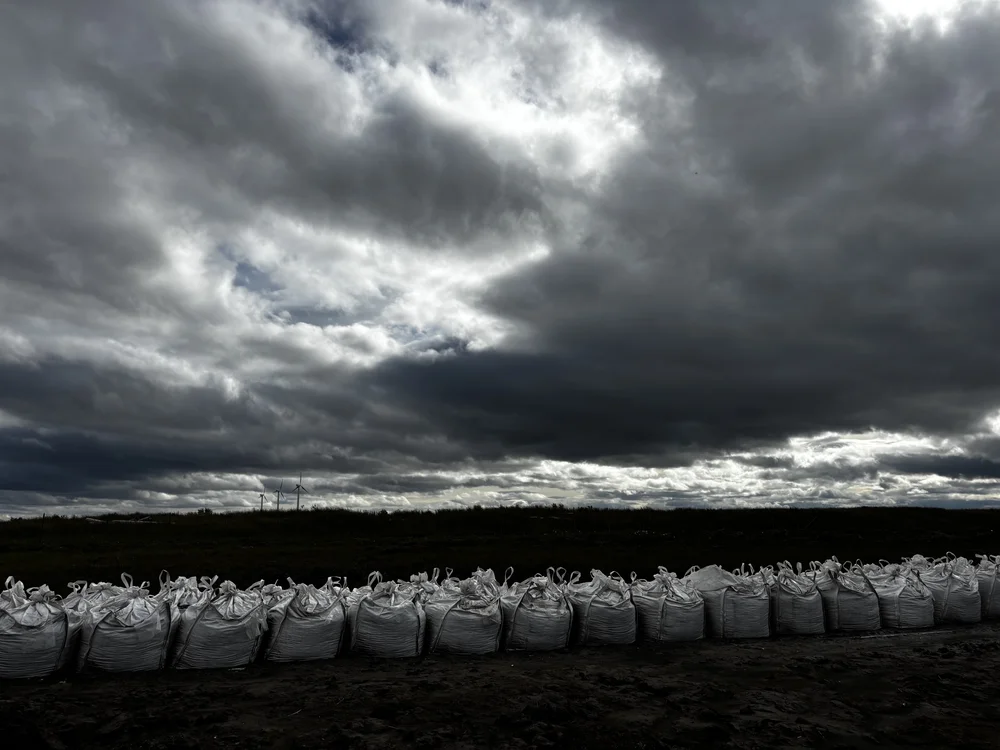
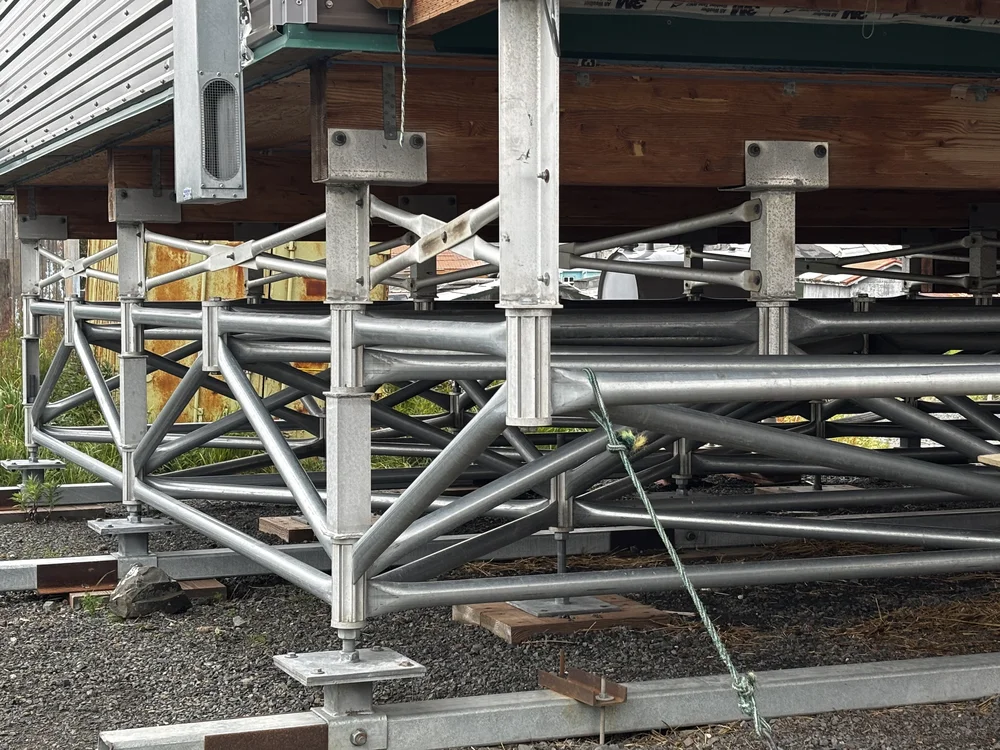
"Super sacks" being used to help mitigate storm surges that are threatening community infrastructure in a village in the Yukon–Kuskokwim (YK) Delta along the Bering Sea Triodetic foundation


Story as Infrastructure: How story shapes consciousness, consciousness shapes space and space creates story

Ixchel Xochitlzihuatl – Uto-Aztecan somatic practitioner, visual artist and academic

This presentation examines three case studies in how story can be an intervention in public space in the practice of Indigenous-centered public interest design. 

We will examine: 

  • 3 amazon tribes co-creating a shared relationship to space through storytelling and ceremony, across cultural differences. 
  • Mixed indigenous migrants recovering old stories at the US/ Mexico border and -reidigenizing their relationship to public space. 
  • Global cohorts of people learning cyclical Earth Based stories and indigenous time keeping systems to expand their understanding of how to live and act in alignment with Natural Law (Haudenoshonee). 

Together, these case studies provide examples of the stories we tell to shape how we relate to community, our species and the planet.  Expanding on Jungian approaches to meaning making, while centering indigenous psychology and planning, the presentation asks: What becomes possible if we see story as a “third space” of infrastructure, in which community members collaboratively generate cultural and imaginal realms which inform social, ecological, and spatial realities? 


Ron Acob – Master of Architecture Student, Portland State University

Mendy Miller – Master of Library and Information Science, University of Washington; Indigenous Nations & Native American Studies Bachelor of Arts, Portland State University

The journey to reclaim an Oak Savanna on the PSU urban landscape for food, medicine, and ceremony began over a decade ago with students seeking sanctuary on campus, a place to come together with Indigenous community and partners, to celebrate the seasons and develop reciprocal relationships with the land, to practice land tending and restoration of native plant relatives, inviting pollinators like birds and insects into the ecosystem. This has culminated in PSU’s Indigenous Nations and Native American Studies Department, and Indigenous Traditional Ecological and Cultural Knowledge (ITECK) Program. Storytelling is an integral part of this process. Since 2011, various initiatives from talking circles, newsletter publication to short films and more, have been principal in the continuity of cultural practices, relationship building, and to the dreaming and visioning of the site. Storytelling has always been central to the Indigenous led curriculum, place-based and hands-on projects, and the garnering of support for the development of the ITECK Center. The work continues in finding ways to share the story and expand the efforts behind the Oak Savanna.


Cenia Cordova – Museum Studies Professional; Specialist in Historical Heritage

What can a home tell us about ancestral knowledge? This presentation explores how Indigenous knowledge is not only passed down through stories, practices, and people, but is also carried through the places where everyday life takes place. Focusing on the experiences of Indigenous midwives, it considers the relationship between temporality, domestic space, health, and the transmission of ancestral knowledge. These spaces are not simply physical settings for care; they can hold memories, relationships, practices, and ways of understanding the land that have been carried across generations. The presentation also reflects on the challenges Indigenous midwives face today and how these challenges influence the way spaces are adapted, used, and understood. Together, we will ask what designers and communities can learn when we begin to see domestic spaces as living repositories of knowledge, memory, and connection.

Urban Indigenous Experience + Spatial Justice

Shattuck 212

AIA CEU Credit Offered: 1.5 AIA LU|HSW

Presentation Descriptions

Culture, Land, Memory, and Law: Indigenous Relationships with Transforming Urban Landscapes

Harshit Sosan Lakra – Oraon (Kurukh) Tribe; Associate Professor, IIT Roorkee; Fulbright–Nehru Postdoctoral Fellow, University of Michigan

Ajit Roshan Tete – Kharia Tribe, Jharkhand, India; Community Representative

Contributing Narrators & Authors
Kehaulani Lum · Jessica Martínez-Cruz · Kyle Whyte · Steve Hobbs · Gunjal Ikir Munda

Two transforming Indigenous landscapes in different countries enter into conversation, reflecting on cultural places as living archives of land, memory, culture, law, and Indigenous relationships to place.

Through stories and reflections, this session considers how Indigenous peoples perceive, remember, imagine, negotiate, and sustain relationships with land amid urbanizing landscapes—and how histories, laws, and governance can both constrain and support those relationships. Bringing lived memories of cultural places into conversation with longer histories and legal frameworks, the session explores experiences of power, pride, freedom, belonging, and aspirations for the future.

Together, these perspectives create space for cross-learning across peoples and places, asking how memory and lived experience can help restore relationships with land, strengthen Indigenous rights, foster hope, and protect cultural landscapes amid urbanization.
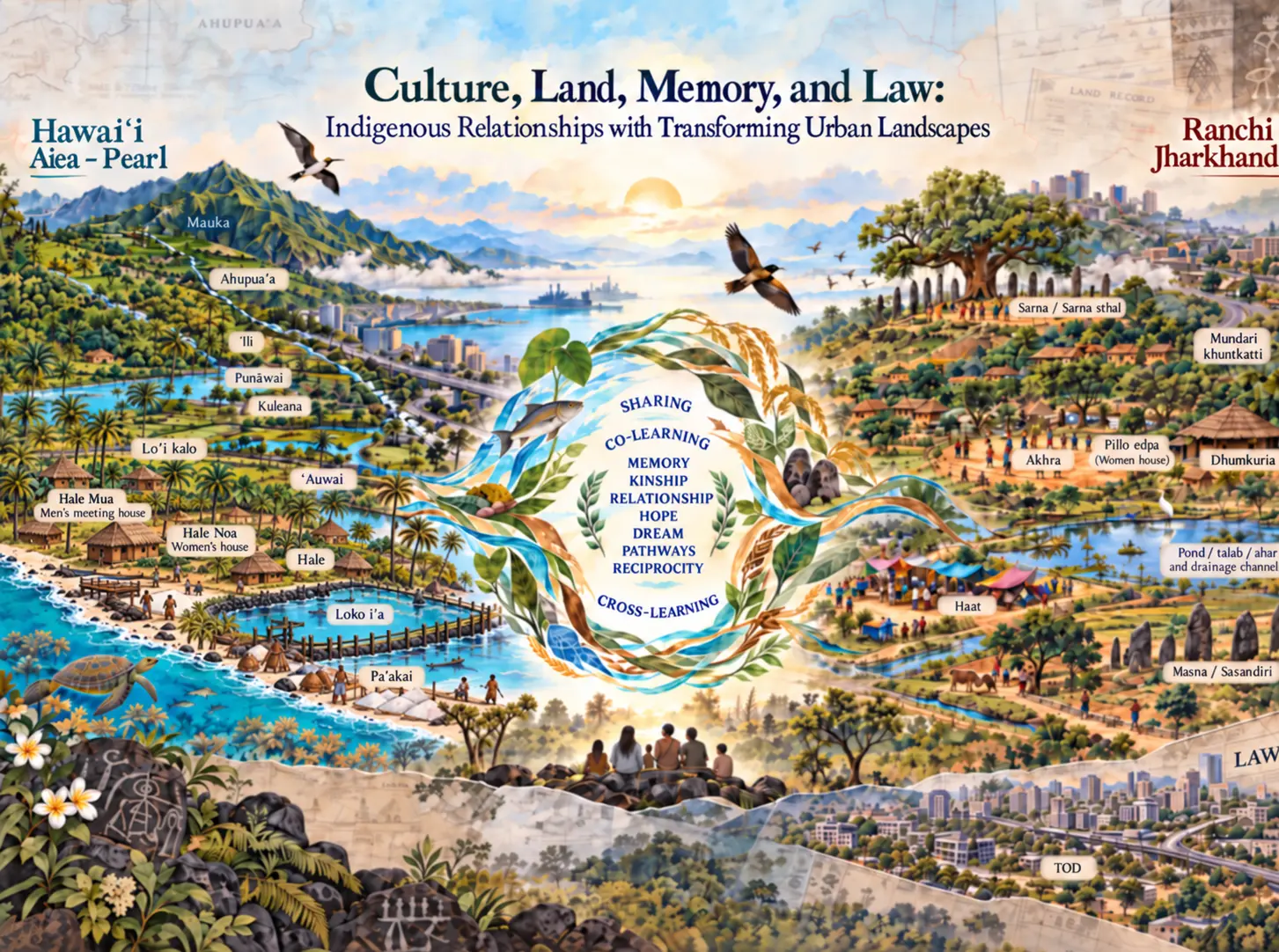
Crosslearning Project


Donghwan Moon, RA – Assistant Professor of Architecture, NC State University College of Design

Raja Manikam Bandari – PhD Student, College of Design, NC State University

What can designers learn when they begin by listening to the people and places already shaping a community’s future? This session shares lessons from a public interest design studio at NC State University focused on coastal Kenya, where students worked with community members, local universities, and NGOs to explore how Indigenous knowledge can guide design. Through mapping, workshops, interviews, and conversations, the studio examined relationships among land, water, culture, livelihoods, and climate. By treating local knowledge as a source of design insight, the studio explores how architecture can strengthen cultural continuity, environmental stewardship, and long-term resilience in coastal communities.


Christian Hart Nakarado – Assistant Professor, Wesleyan University; Principal, Slow Built Studio

Architecture has played a significant role in the creation of the climate crisis and will also be critical in adapting to its consequences. As climate migration begins to transform parts of the world believed to be “climate havens,” we must consider how to live in these places in ways that won’t perpetuate our ecological problems. This presentation examines one such place surrounding the Great Lakes, and the Anishinaabe building practices that have characterized life in the region for hundreds if not thousands of years. It argues that by adopting the intentional ephemerality of these highly mobile and adaptable forms of architecture, we might be able to build a truly resilient future.


Erin Voss – Assistant Professor, University of Hawaiʻi at Mānoa School of Architecture

The Department of Hawaiian Homelands (DHHL) is ramping up the construction of new housing options to serve native Hawaiian beneficiaries. To support this effort, the University of Hawai’i at Mānoa Community Design Center began a new partnership with DHHL to give students the opportunity to contribute conceptual design ideas for real-world projects. First-year students in the Master of Landscape Architecture program conducted research, site visits, and interviews with native Hawaiians to understand the scope of the site, a future 400 single-family home development in Kīhei, Maui. Grounded in extensive research and design explorations, students proposed low to medium maintenance designs for an open space that reflects the unique needs of kūpuna (elders) and keiki (children).
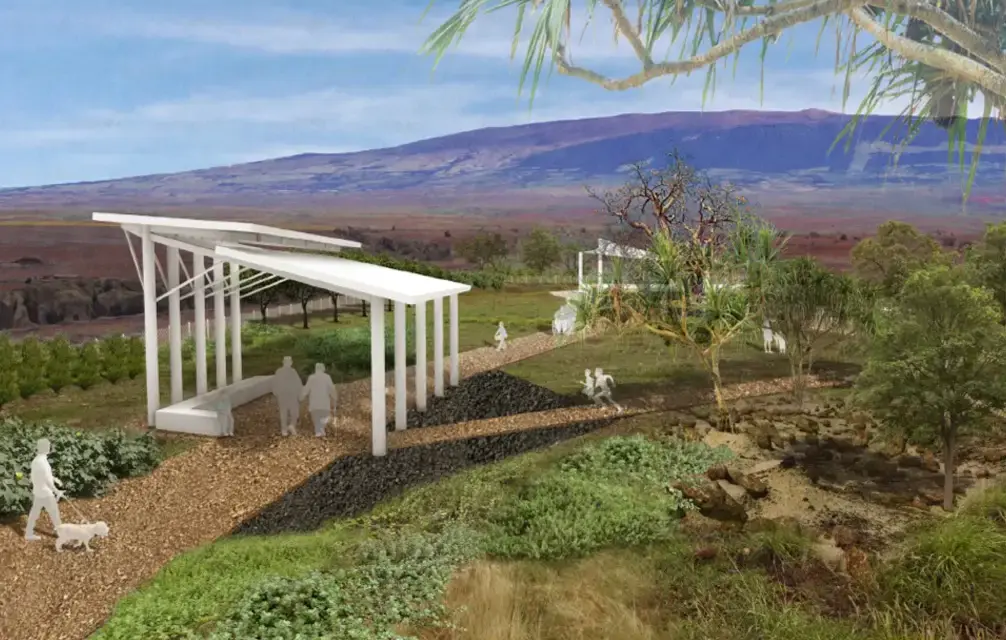
Waiakoa

12 - 1:15 PM

NASCC

Lunch

1 - 2:30 PM

Sharing Knowledge Sessions

ITECK Oak Savanna Workshop

NASCC 110

Judy BlueHorse Skelton – Associate Professor (Retired), Indigenous Nations Studies, Portland State University

With nearly 70% of Indigenous Peoples living in urban areas of the US today, how do we reclaim the urban forests, waterways, and plant and animal relatives for healthy lifeways: food, medicine, ceremony and healing? What does that look like, feel like, smell like, taste like?

We’ll take a look at the Oak Savanna Project at Portland State University, a work in progress, guided by students and community and the land herself.

Inclusion: Proposals, Collaborations and Funding

SMSU 296

AIA CEU Credit Offered: 1.25 AIA LU|HSW

Presentation Descriptions

Omar Hakeem, AIA – Architect, Designer, and Founder, To Be Done Studio

Omar Hakeem’s Fieldwork program is a national initiative supporting rural and Tribal communities through community-led design, planning, and project development. Rather than imposing predetermined solutions, the program works alongside communities to identify priorities, develop ideas, and translate local knowledge into actionable plans. Its Native American focus recognizes the importance of Indigenous cultural knowledge, storytelling, land relationships, and community self-determination in shaping the built environment. Through workshops, site visits, coaching, technical design assistance, peer learning, and project development support, Tribal communities can advance cultural centers, archives, public spaces, and other projects rooted in their histories and aspirations. Hakeem’s earlier work with the Pueblo of Laguna and Eastern Shoshone communities similarly emphasizes participatory design, cultural preservation, and community expertise. Fieldwork ultimately positions architecture and planning as tools for strengthening cultural continuity, identity, and local capacity.

Learning Objectives:

  1. Understand how community-led fieldwork and participatory design can incorporate Indigenous knowledge, cultural values, and local expertise into architectural and planning processes.
  2. Analyze how Native American communities demonstrate how design can support cultural continuity, community priorities, and Indigenous self-determination.

Scott Moore y Medina – President, Design Corps; EAPC Architects Engineers; University of Oklahoma

This session will explore how Indigenous-minded architects and planners are transforming the A/E/C (Architecture, Engineering, and Construction) industry by embedding Indigenous values, governance, and community priorities into the earliest phases of project development. Too often, tribal projects are initiated without the early involvement of architects and planners—resulting in misaligned scopes, poorly constructed scope/cost narratives fed into grant submissions or funding requests, as well as missed opportunities to reflect the cultural, spiritual, and intergenerational needs of Native communities. This session will challenge that norm by demonstrating how Indigenous-led design processes can support tribal sovereignty, economic diversification, and governance innovation, and how to avoid common pitfalls in project planning—such as incomplete RFQ/Ps, missing pieces of programmatic needs, unrealistic budgets, and culturally disconnected scopes—and instead adopt practices that lead to more successful, realistic and sustainable outcomes.

Learning Objectives:

  1. Identify strategies for engaging Indigenous architects, planners, Tribal leadership, and community members during pre-design to develop culturally responsive projects.
  2. Identify Indigenous-led planning principles—including cultural fluency, intergenerational engagement, alternative delivery methods, and long-term collaboration.

Bryan Bell – Founder and Executive Director, Design Corps; Co-founder, SEED Network

Who gets to define what successful design looks like? Inclusion becomes meaningful when the people most affected by a project can help identify priorities, shape decisions, and evaluate results. In this session, Bryan Bell introduces the SEED Evaluator, a practical framework for incorporating community voices throughout the design process—from defining social, economic, and environmental challenges to setting goals, documenting participation, and measuring outcomes. Rather than treating engagement as a single meeting or checklist, the Evaluator supports transparent decision-making, accountability, and reflection. Attendees will explore how its questions can reveal who is included, whose knowledge is valued, and whether a project delivers the benefits communities themselves define. The session offers practical methods for turning inclusion from an aspiration into a documented and measurable part of design practice.

Learning Objectives:

  1. Apply the SEED Evaluator to identify community priorities and support inclusive participation in design and planning decisions.
  2. Develop measurable goals and documentation methods that demonstrate how community input influenced a project’s process and outcomes.

Sovereignty + Indigenous Public Interest Design

SMSU 298

AIA CEU Credit Offered: 1.5 AIA LU|HSW

Presentation Descriptions

Ted Jojola, PhD – Director, Indigenous Design + Planning Institute, School of Architecture + Planning, University of New Mexico

Ted Jojola’s work on Indigenous sovereignty emphasizes that sovereignty is not simply a legal status granted by a colonial government, but an inherent capacity of Indigenous nations to govern themselves, sustain their cultures, and determine their own futures. Through Indigenous planning and design, Jojola connects sovereignty to control over land, community development, cultural expression, and decision-making. He argues that conventional planning often imposes Western assumptions that marginalize Indigenous knowledge and priorities. Indigenous planning instead draws upon traditional knowledge, cultural values, land relationships, and community participation to restore self-determination. His work demonstrates that planning can become a practical form of decolonization: communities reclaim authority over their narratives, spaces, institutions, and futures. Sovereignty therefore operates not only through political institutions, but also through everyday practices of cultural continuity and community development. (School of Architecture and Planning)

Learning Objectives:

  1. Explain how Jojola distinguishes Indigenous sovereignty and self-determination from conventional Western concepts of political authority and planning.
  2. Apply Jojola’s principles of Indigenous planning to analyze how control over land, culture, design, and community development can function as expressions of sovereignty.

Michaela Shirley, MCRP – PhD Candidate in American Studies, University of New Mexico

Michaela’s presentation examines the relationship between education and Diné sovereignty through the intertwined histories of land, community formation, and planning. Drawing on archival research, Indigenous planning scholarship, and autoethnographic reflection, she reconsiders dominant narratives that portrayed Diné communities as lacking the social institutions necessary for modern citizenship and development. Focusing on educational initiatives ranging from boarding schools to community schools, she argues that schooling has long functioned as a planning infrastructure shaping relationships among land, governance, and futurity. At the same time, Diné communities have maintained and renewed their own systems of learning grounded in kinship, place-based knowledge, and collective responsibility. Through stories rooted in her experiences and the teachings of her nalí, Isabelle Shirley, she explores how sheep camp itself has served as a teacher and how everyday forms of education has been practiced beyond the boundaries of formal institutions. By bringing together historical analysis and personal narrative, this presentation asks what it means to understand sovereignty not only as a political status but as a lived practice sustained through education.

Learning Objectives:

  1. Participants will be able to understand how education historically and presently can function as a planning infrastructure for Indigenous sovereignty by shaping relationships among land, knowledge, community, and future generations.

Theodore Edaakie, AIA, NCARB, AICAE – Architect at Studio Southwest Architects

This session examines how Indigenous architects and planners are transforming the architecture, engineering, and construction industry by placing Tribal sovereignty at the center of planning and design. Sovereignty is expressed not simply through cultural imagery, but through the authority of Native communities to define priorities, make decisions, allocate resources, and determine what constitutes project success. Through case studies, interactive tools, and dialogue, participants will explore how early collaboration with Indigenous design professionals can produce culturally grounded project scopes, stronger funding proposals, and more sustainable economic and community outcomes. The session emphasizes Indigenous principles—including respect for land, relationships, language, cultural continuity, collective well-being, reciprocity, and responsibility to future generations—as foundations for decision-making throughout the design process. Moving beyond the goal of decolonizing established practices, the session calls for Indigenizing the systems through which projects are conceived, funded, designed, and delivered, ensuring that Tribal communities retain meaningful authority over their built environments and futures.

Learning Objectives:

  1. Explain how Tribal sovereignty is advanced when Indigenous communities retain decision-making authority throughout project conception, funding, planning, design, and implementation.
  2. Apply Indigenous principles—including respect for land, cultural continuity, reciprocity, collective well-being, and responsibility to future generations—to create culturally grounded and sustainable design processes.

Place-Based Agency + Resilience

Shattuck Hall 212

AIA CEU Credit Offered: 1.25 AIA LU|HSW

Presentation Descriptions

Roberto Nutlouis – Executive Director, Nihikeya

What happens when communities become the authors of their own future? For too long, decisions about tribal land, community development, and public policy have often relied on outside expertise while overlooking the knowledge and capacities that exist within communities themselves. This discussion explores a different approach, one that centers relationships to place, community wisdom, and Indigenous perspectives on land, belonging, and collective well-being. Drawing on examples and lived experiences, we will discuss how reconnecting with landscape and local knowledge systems can strengthen community agency and connect culturally vibrant futures. Designers, community practitioners, scholars, and members of the public are invited to join this timely conversation about people, place, and the power of local knowledge.

Learning Outcomes:

  • Identify how relationships to place, landscape, and local knowledge systems can inform culturally grounded design, planning, and policy practices.
  • Analyze the limits of outside expertise when it overlooks Indigenous perspectives, community wisdom, and lived experience.
  • Reflect on ways designers, scholars, practitioners, and public audiences can support community agency and culturally vibrant futures.

Souksavanh T. Keovorabouth, PhD – Assistant Professor, Northern Arizona University

Urban landscapes are continuously expanding through linear models of development that often marginalize Indigenous communities, particularly Indigenous Queer, Trans, and Two-Spirit (IQT2S) peoples, limiting our ability to exist safely within cities. This project examines how Indigenous peoples assert our voices within urban planning and development practices on Turtle Island, specifically in Phoenix, Arizona. We are guided by two central questions: 1) What would Indigenous Queer spaces look like in cities? and 2) How do we create IQT2S spatial interventions? We envision a streamlined process that allows IQT2S voices and experiences to be heard and implemented within city development.

Learning Outcomes:

  • What Indigenous embodied knowledge and placemaking are critical to urban design and development.
  • Examples of what Phoenix, as the fifth largest city in the US and the third largest Native populated city, encompasses Indigenous placemaking, specifically for Indigenous Queer, Trans, and Two-Spirit Peoples.

Todd Ferry, AIA – Assistant Professor, School of Architecture at Portland State University; Associate Director, Center for Public Interest Design

Meaningful community engagement requires designing the ways people participate, share knowledge, explore possibilities, and make decisions together. Drawing on more than 15 years of community-engaged design work, Todd Ferry will share how the Center for Public Interest Design develops tools and processes that create opportunities for community members to act as co-designers. Examples include work with people experiencing homelessness on the creation of tiny house villages and Portland’s LGBTQ+ community on Darcelle XV Plaza, before turning to the Alaska Design Collaboratory, where Alaska Native communities are confronting accelerating climate impacts and, in some cases, displacement from ancestral homelands. Through participatory tools that bring Indigenous knowledge, lived experience, and technical expertise into dialogue, the work asks how design can create the conditions for communities to lead decisions about adaptation, resilience, and their communities’ futures.

Learning Outcomes:

  • Explore how designers can apply the same design skills and rigor to the engagement process that they bring to designing built outcomes, creating more meaningful opportunities for communities to shape decisions about place.
  • Learn how participatory tools can bring local knowledge, lived experience, and technical expertise into dialogue to support community-led decision-making and resilience.
3 - 4 PM

Lincoln Hall Auditorium

Panel Discussion

Led by moderators from Sharing Knowledge Sessions

4:15 - 5:15 PM

Lincoln Hall Auditorium

Keynote: ZGF & Yakama

Sponsored by ZGF

Cultivating Cultural Ecosystems with Intentional Wood Sourcing

Why should we shift away from thinking about architecture as the product of supply chains and more about the cultivation of a cultural ecosystem? The former starts to underline a preference for transactional efficiency and the linear commodification of our natural resources, while the latter describes something much more interconnected and influenced by our stewardship goals as a society. 

This keynote will showcase architecture’s potential to cultivate cultural ecosystems through mass timber and wood sourcing in general.   Participants will hear about how the new PDX airport expansion and Hewlett-Packard’s new research facility in Vancouver, Washington explored intentional procurement approaches that drove positive outcomes for local indigenous landowners.  Come learn about the past relationships formed—and future pathways in development—that can continue to cultivate these tribal wood markets and support their stewardship of this region’s most precious natural and cultural resource.

Speakers

5:15 - 5:30 PM

Lincoln Hall Auditorium

Closing Remarks

7 - 8 PM

Shattuck Hall 212

These Sacred Hills Movie Screening

Panel discussion to follow. Free + Optional.

8 - 8:30 AM

Lincoln Hall Reception

Check In & Coffee

8:30 - 10 AM

Lincoln Hall Auditorium

I-SEED Award Projects: Exemplary Indigenous Design

10 - 10:40 AM

Lincoln Hall Auditorium

I-SEED Award Jury Discussion

Jury Members

10:40 - 10:55 AM

Break

10:55 - 11:40 AM

Lincoln Hall Auditorium

Keynote: Sergio Palleroni

Everything is Interrelated

11:40 AM - 12 PM

Lincoln Hall Auditorium

The Conversation Continues

12 - 1 PM

Lunch

Self Provided

1 PM

Tours Depart

Tours are subject to change. More info soon.

PDX Airport

NASCC Bus Loop

ITECK + Oak Savanna

NASCC Lobby

PLACE

Self Transport

ACKNOWLEDGEMENT FROM THE ORGANIZERS

We acknowledge the great knowledge of Indigenous people around the world, rich traditions collected and passed on through generations. There is also new Indigenous knowledge being created in the present.

Our hope for this conversation, occurring over a year in many formats, is to respect and share some of this knowledge while revering that it belongs to the originators. We are grateful to the Indigenous contributors willing to share their knowledge.

We also respect the cultural backgrounds, lived experiences, and professional knowledge that Indigenous and non-Indigenous bring to this collective conversation. Learning from every person is a gift.

Our goal is to understand more about how design and planning have empowered and strengthened Indigenous communities in the past, and how design and planning can empower and strengthen Indigenous communities in the future. How can these lessons help us better serve all communities?

Our method is Learning by Sharing, from Sergio Palleroni, who has forty years of working with Indigenous communities around the world, from Tibet to Mexico to the Pacific Northwest.

Our hope is that this knowledge, combined with the tools of design, will provide positive pathways forward for Indigenous and non-Indigenous communities.

Accessibility

The Structures for Inclusion conference at PSU in Portland, Oregon aims for an inclusive, accessible event that enables all individuals, including people with disabilities, to engage fully. Participants requiring accommodations should contact Bryan Bell at Bryan@designcorps.org or info@designcorps.org by Sunday, October 4, 2026. Requests made after this date will be provided to the best of our ability.