



2026 I-SEED Award Winner
MLCV Ventura Urban Housing Project
Affordable, culturally grounded housing for urban Indigenous communities in Minneapolis
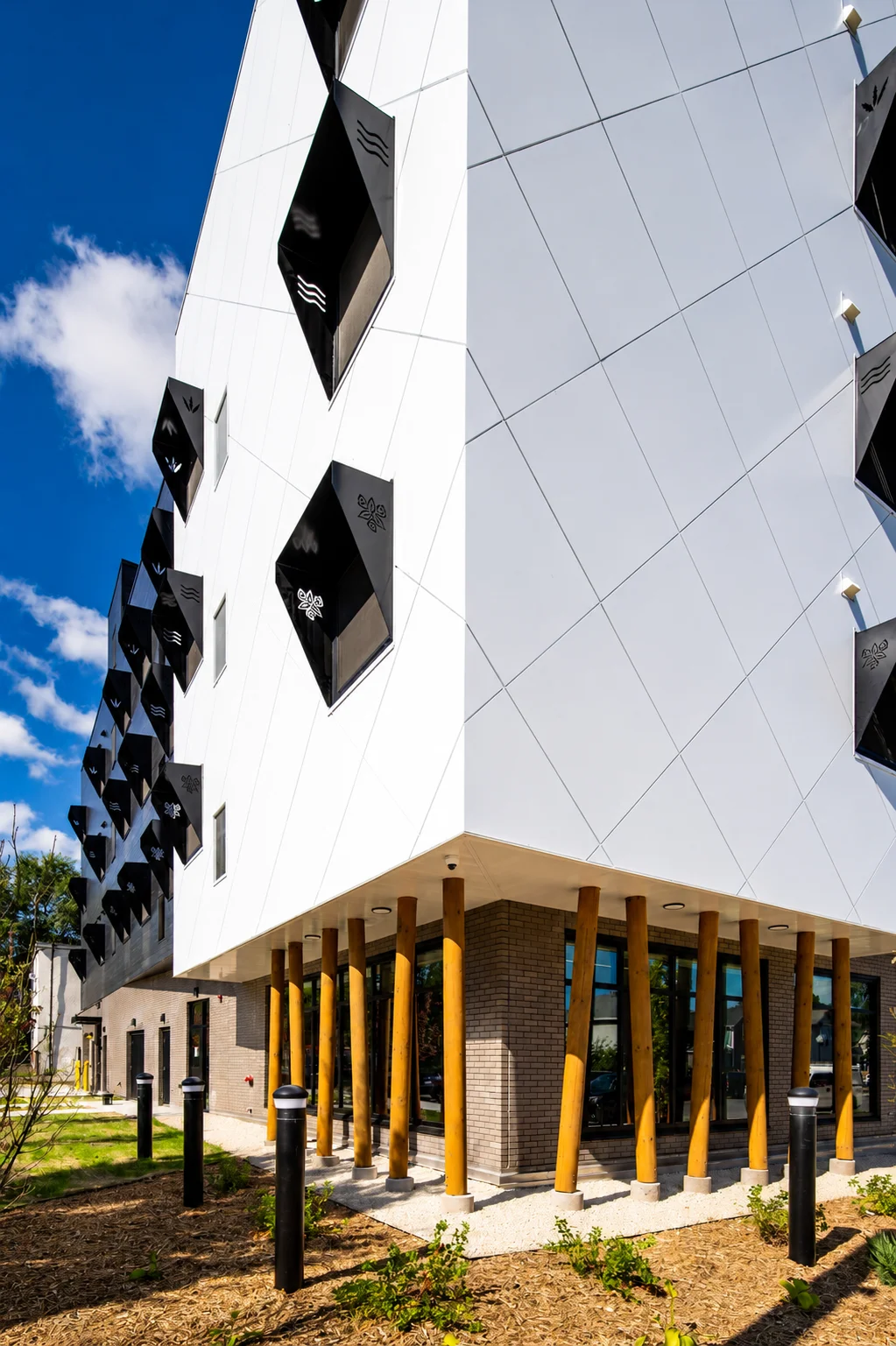
Description
Mille Lacs Corporate Ventures successfully transformed underutilized Minneapolis land into a vibrant, multifaceted urban space that stands as an exemplary, entirely Native-led model of affordable housing and Indigenous sovereignty. By returning land stewardship to Indigenous people and incorporating cultural protocols—such as sacred earth ceremonies before and after construction—the MLCV Ventura Urban Housing project asserts tribal leadership and resilience within a modern urban framework on historical Dakota lands.
The physical design of the building seamlessly blends community, administrative, and residential functions. Safe, private underground parking services the building, while the ground floor offers a productive, light-filled environment featuring nine offices, two conference rooms, and an open collaboration space. Serving as a vital community anchor, the first floor hosts a versatile 54-person gathering space, a computer lab, and a commercial kitchen. Above these administrative levels, the development provides 36 affordable residential units ranging from studio to three-bedroom apartments to accommodate diverse family needs. The building’s crown jewel is its rooftop, which pairs sustainability with community life through a solar panel array alongside a fenced playground and a picnic area. Ultimately, this landmark project serves as a beacon of self-sufficiency, addressing the critical need for urban affordable housing while inspiring future generations of Indigenous designers, architects, and builders to continue shaping culturally grounded, environmentally healthy communities.
Stakeholders
Mille Lacs Corporate Ventures
Design Team
Wenaha Group – Owner Rep; DSGW Architecture – Architect and Interior Design; PCL Construction Services, Inc – Construction Manager; Rehder & Associates, Inc – Civil/Survey; RL Mather – Kitchen Design; Ronald Melchert – Landscape Architect; CMTA – MEP Engineering; Sandman Structural Engineers – Structural Engineer; True North Consulting Group – Technical
Jury Summary
The MLCV Ventura Urban Housing Project is a highly competitive, Indigenous-led development addressing the critical need for affordable housing among Minneapolis’s urban Native community. Located along the Franklin Avenue American Indian Cultural Corridor, the project transforms underutilized land into 36 affordable homes alongside community gathering spaces, administrative offices, workforce resources, a commercial kitchen, computer lab, playground, rooftop garden, and solar infrastructure. Led by Mille Lacs Corporate Ventures and informed by Mille Lacs Band of Ojibwe identity, the design incorporates Ojibwe language, symbols, seasonal narratives, and forms inspired by traditional lodges, creating safety, belonging, and visible Indigenous presence. Cultural land protocols, including sacred earth ceremonies acknowledging Dakota homelands, further ground the development. The project advances Tribal self-determination, economic capacity, self-sufficiency, and collective urban Indigenous sovereignty while inspiring future Indigenous designers, architects, and builders.
Detailed Juror Comments
- Overall, this is a highly competitive Indigenous-led project. The integration of affordable housing and community infrastructure, Indigenous cultural expression embedded in architectural decisions, tribal leadership, culturally grounded land protocols, and visible Indigenous presence within an important urban Native corridor.
- Great to see project focusing on housing challenges for Indigenous urban communities in such a culturally-centered practice! Highlights: self-sufficiency, addressing the critical need for urban affordable housing while inspiring future generations of Indigenous designers, architects, and builders; centers Indigenous identity throughout the building for Indigenous people to “feel a sense of security and safety when the needs of culture or ceremonial practice arise.” Well documented.
- This application stands out as the first commercial project and as an urban Indigenous housing effort located along an American Indian Cultural Corridor. The project’s thoughtful design, which reflects the Mille Lacs Band of Ojibwe, suggests an important intervention into urban space, where Indigenous presence is often erased or treated as symbolic rather than living and collective. I am especially drawn to how the project contributes to urban collective Indigenous sovereignty by connecting housing, cultural representation, and economic infrastructure.
- Great to see work center Indigenous urban experience and the need for housing in these settings
- This project is a strong example of Indigenous-led community development that addresses a critical need for affordable urban housing while advancing Tribal self-determination and economic capacity. The project successfully transforms underutilized land in Minneapolis into a mixed-use development that combines affordable housing, community gathering space, workforce resources, administrative offices, and sustainable infrastructure. The inclusion of 36 affordable housing units, community meeting areas, a commercial kitchen, computer lab, rooftop garden, playground, and solar energy systems demonstrates a holistic approach to community well-being. The strongest alignment with the I-SEED principles is found in its support for Indigenous self-sufficiency, representation, and community investment. The application also highlights Native leadership in the planning and development process and references cultural protocols, including sacred earth ceremonies acknowledging the site’s connection to Dakota homelands. However, compared to some of the strongest submissions reviewed, the application provides less evidence of extensive community co-design, cultural programming, language preservation, intergenerational knowledge sharing, or direct community-led stewardship processes throughout design development. The project’s primary impact is housing, economic opportunity, and urban Indigenous presence rather than cultural revitalization itself. Nevertheless, it is an impressive and meaningful Indigenous-led development with tangible community benefits.
- Strengths: MLCV Ventura Urban Housing Project is located in Minneapolis in the Franklin Avenue corridor. The Mille Lacs Corporate Ventures is a native led entity. Indigenous designers integrated cultural elements into the building to support the healthy native community. Although urban Indian based, it is informed by the Mille Lacs Ojibwe tribal membership. Community engagement process is reflective of urban Indian social and economic situations. Design elements reflect Indigenous worldviews. Motifs support language and symbols. Rooftop use extends the footprint in effort to integrate the outside landscape. Building serves to develop an example and narrative for young people to become designers. Process included ceremony. Self reliant technologies are integrated into design. Weaknesses: None. Would have liked to see how the project was staged from community engagement through construction.
- Providing representation and belonging to urban native population and recultivating the identity in a contemporary building. Use of Ojibwe language in signage. Traditional Ojibwe lodges inspired building form, seasons and cultural narrative. As referenced in main description the rooftop area is mentioned as the “crown jewel” of the community space – I would like to see images of this.