



2026 I-SEED Award Winner
Winnebago Tribe of Nebraska Law and Justice Center
A restorative-justice campus rooted in tribal sovereignty and cultural continuity
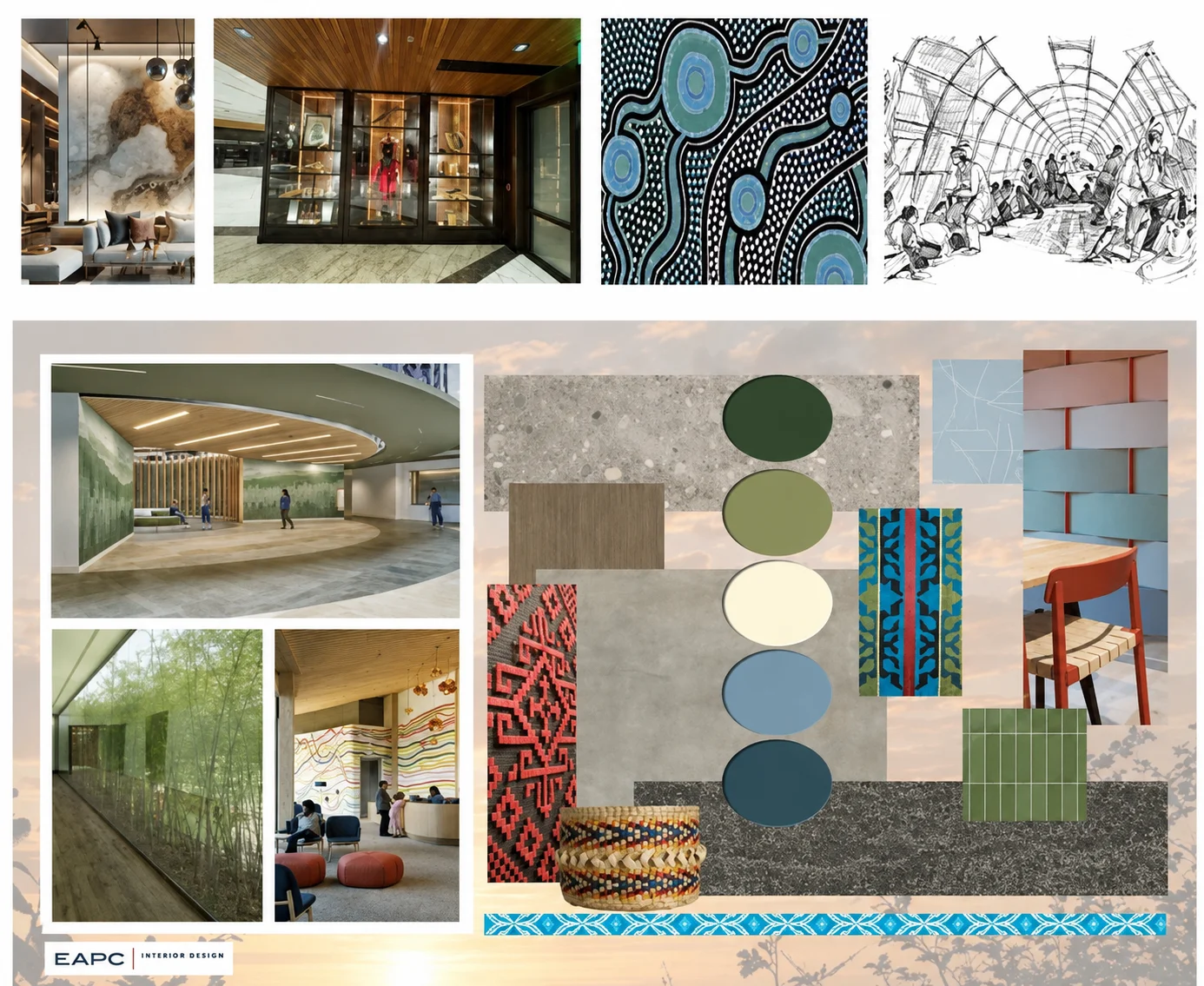
Description
The Winnebago Tribe of Nebraska Law and Justice Center is a comprehensive, purpose-designed facility designed to strengthen the Tribe’s justice system, improve public safety, and reinforce tribal sovereignty, while providing inspiring opportunities to honor the Tribe’s history and promote cultural continuity. The project consolidates law enforcement, courts, detention, and support services into a centralized, integrated campus that enhances coordination, operational efficiency, and access to justice.
The facility functions as both a justice hub and community-centered environment, supporting policing, adjudication, rehabilitation, and victim services within a culturally grounded framework. By Indigenous restorative justice practices, including peacemaking and wellness programming, the design reflects a holistic approach aligned with traditional Tribal values and customs.
Beyond functionality, the project represents a long-term investment in governance infrastructure. It addresses deficiencies in existing repurposed facilities and establishes a modern system that prioritizes safety, dignity, and community well-being. Through collaboration with stakeholders and alignment with the Tribe’s Comprehensive Plan, the project advances long-term goals related to justice, self-governance, and resilience.
Stakeholders
Winnebago Tribe of Nebraska: Darla LaPointe, Tribal CEO; Daryl LaPointe, YCIC / Youth Shelter Director; Ron Nohr, Construction Management Director; Britanny Thomas, Planning and Development Director; Lisa DeCora, Contract/Grant Fiscal Specialist; Tiffany Buchanan, Chief Administrative Officer; Miskoo Petite, Human Services Director; Jennifer Berridge, Tribal Court Administrator; Fannie Latray, Land Management; Mark Stout, Data Center Management; Roland Warner, Tribal Historic Preservation Office (THPO) Director; WTN Culture Keepers/Elders
Design Team
EAPC Engineers Architects | Native Nations Studio – Project Planning, Management & Design Lead; Scott Moore y Medina, | NNS Director; Leap Chear, Principal in Charge | EAPC Partner; Ryan Kranz, Project Manager | Lead Architect; Tylan Bear, Indigenous Design Specialist | Project Designer; James VanWesten, Project Designer; Alanna Eggers, Senior Interior Designer; Charlie Holm, Design Intern; Parker Lawley, Lead Mechanical Engineer; Caleb Bray, Mechanical Engineer; Brian Wentland, Lead Electrical Engineer; Jacob Abraham, Electrical Engineer; Mason Bolkema, Electrical Intern; Sam Wilke, Lead Structural Engineer; HMN Architects – Law and Justice Design Consultant; Adam Kuehl, Architect | Design Consultant; Olsson Engineering – Civil Engineering Consultant; Jennie Kozal, Civil Engineering Consultant
Jury Summary
The Winnebago Tribe of Nebraska Law and Justice Center is a culturally grounded proposal designed to improve justice and reinforce Tribal sovereignty. Developed by Native Nations Studio, the justice hub consolidates law enforcement, courts, detention, support services, and justice programs within an integrated campus. Its restorative framework draws on Winnebago values and guidance from Bear Clan culture keepers. Tribal leadership, elders, cultural advisors, the Tribal Historic Preservation Office, and stakeholders participated through weekly meetings, supporting representation and collaborative planning. Architectural concepts, including a longhouse-inspired central corridor, promote gathering, connection, cultural continuity, and an institutional relationship to the land. The project aligns strongly with I-SEED principles through Indigenous representation, community engagement, sovereignty, governance, and culturally responsive design. Long-range planning also considers sustainability and future Tribal needs. The proposal offers an important model for culturally informed Tribal justice infrastructure.
Detailed Juror Comments
- The project aligns well with the mission it focuses on Indigenous representation, culturally grounded design, community participation, restorative justice, and Tribal sovereignty. The strongest areas are mission alignment, community-driven planning, Indigenous engagement, and documented community benefit. Factors limiting a higher score include its pre-implementation status, limited measurable outcomes, incomplete environmental performance data, and limited evidence of community authority in key design decisions.
- This project excels at all I-SEED mission principles: “designed to strengthen the Tribe’s justice system, improve public safety, and reinforce tribal sovereignty, while providing inspiring opportunities to honor the Tribe’s history and promote cultural continuity. The project consolidates law enforcement, courts, detention, and support services into a centralized, integrated campus that enhances coordination, operational efficiency, and access to justice.” Look forward to learning more about the project and its impacts and influences on similar projects throughout the country!
- Important work, I think the proposal is strong and enhances tribal sovereignty. This is an institution vs a grassroots project which is important to discuss.
- Strengths: Winnebago Tribe of Nebraska (WTN) Law and Justice Center is a justice hub facility for the tribe. It was designed by the Native Nations Studio. It is informed from a restorative justice perspective and supports cultural efforts in that area. It proposes a campus plan to integrate a number of programs related to peace and justice for the tribe. The design was informed by working with various stakeholders, including leadership, cultural advisors, elders and the THPO. The design is informed by the justice cultural keepers, the Bear Clan. Weekly meetings allowed for broad representation and collaborative decision making. Efforts included long-range planning considerations especially around sustainability, cultural considerations and governance. Weaknesses: No indication of how it gets implemented and the next steps for approval and construction. Process falls short of identifying benchmarks for completion or if it as a stage for final design.
- Design process to balance facility role in community while gathering robust knowledge from culture keepers shows through in diagramming and description of process. Application of cultural values with revitalization approach to justice is emphasized by expression of building concepts. Emphasis of longhouse corridor strengthens central gathering feel of the space and shared connections. Care for how building relates to land as a foundational element. Not as highly scored due to conceptual nature of the current status.